


TLDR Venus Flytrap Care Summary
Growing Venus Flytraps – Basic Care
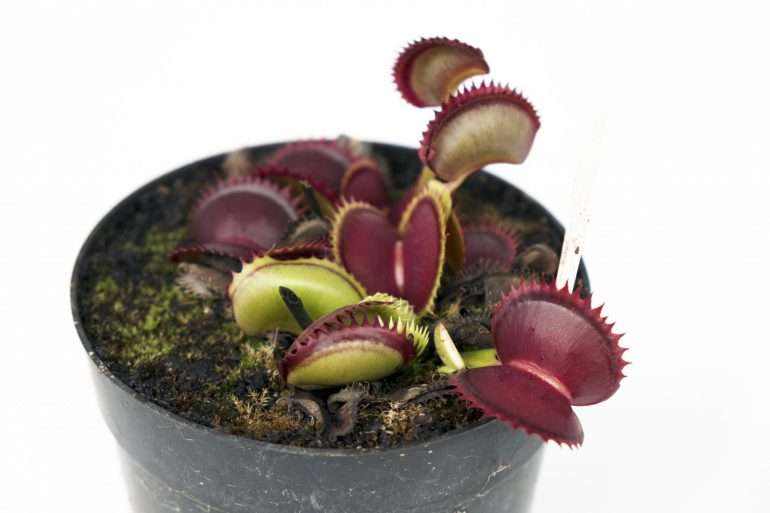
Hey, did you just pick up an awesome new Venus flytrap from HomeDepot/Walmart/your local nursery? That’s super! Actually, that is exactly how your dear author got started with carnivorous plants some 20+ years ago (more time than I’d like to admit). Maybe this is your first, second, or even third time trying to grow Dionaea muscipula (fancy Latin name for Venus flytrap), and I know exactly how tough it can be to keep your awesome new plant producing big, beautiful traps. -I’ve definitely killed my fair share.
Let’s talk about how to grow a Venus flytrap, keeping it alive and healthy. I go into tons of plant-specific detail on our Venus flytrap genus page, but what about the basics? – Those essential quick tips to help a new grower. Strap in, because here’s your crash course:

First thing’s first. Your Venus flytrap requires distilled water. I have an in-depth post dedicated to water quality and types of distillation methods, but the bottom line, and all you really need to know, is that you should water your Venus flytrap with water that has undergone reverse osmosis. You can buy gallon jugs from your local grocery store (usually about $0.99 each), get the stuff delivered via water delivery services like Sparkletts, or install a reverse osmosis system under your sink (which, by the way, makes for excellent drinking water). Use a shallow water tray, and keep it filled during the growing season.
Avoid spring and tap water – the mineral content is too high, and it will damage and eventually kill your flytrap.

Chances are that your Venus flytrap came in a clear plastic container. This plastic dome is great to retain humidity (and moisture, in general), and protects your carnivorous plant in transit from greenhouse to store, and store to your home. Once you’ve got the plant home, chances are you’re going to smother the thing with love, give it enough water to keep it happy, and avoid knocking it around. The dome has served its purpose, and it’s now time to liberate your flytrap so that it has room to spread out, unencumbered. Go ahead and carefully remove the plant from its plastic cage.
If you live in a humid area, you can simply remove and recycle the plastic container. If you live in a drier region, it’s best to acclimate the plant to lower humidity levels. Start by removing the flytrap from its container for a few hours, then returning it for the rest of the day. Each day, remove the plant for a couple extra hours. After a few days, you can remove it entirely.
Do note that without the humidity dome, moisture will be lost to evaporation at a quicker rate, so keep an eye on soil moisture, and don’t let it dry out!

Your new Venus flytrap will appreciate ample sunshine. I grow mine outdoors in sunny Southern California in mostly direct sunlight (the plants are shaded from direct afternoon sun by some taller, nearby pitcher plants). Outdoors or sunny windowsills should suffice.
If you picked up your flytrap from a store where it was kept inside, you’ll want to adapt the plant to brighter conditions over the course of a week to avoid frying it. Similar to the humidity acclimation method discussed above, go ahead and expose the plant to more and more light over the course of a week. By the end of the week, the worst case will be a little bit of plant sunburn. The best case is the plant will perk up and start producing pinkish red hues on the interior of traps.
Remember, more sun = hotter = more evaporation, so keep your flytrap’s soil moist, but not soaking wet.

I think we can all agree that feeding a Venus flytrap is the coolest thing about owning one. What’s the best way to feed a flytrap?
What can you feed a Venus flytrap?
Stick to bugs. Don’t feed your flytrap meat, or anything other than what it would naturally catch in the wild. Anything else will cause the traps to rot before the plant can extract sufficient nutrients from the food. Make sure the bugs are 1/3 to 1/2 the size of the trap itself, so that the trap can completely seal around the insect without it poking out between the teeth or causing the trap to bulge. Anything bigger, and the trap will have a hard time sealing and may rot. Anything smaller, and the prey may escape between the teeth.
If live prey like crickets or mealworms
 isn’t your thing, try dead insects
 that you can rehydrate by soaking in water before feeding to your plant.
How do you feed a Venus flytrap?
Small trigger hairs within a flytrap need to be touched twice within a span of 20 seconds for the trap to snap closed. Once it is closed, a live insect will continue to wiggle around, touching the hairs more, causing the trap to seal and digest. If you’re feeding the plant dead insects, you’ll need to slide a toothpick between the teeth and gently rub the inside surface of the trap to stimulate the trigger hairs manually.
Can you overfeed a Venus flytrap?
If grown outdoors, your flytrap will almost certainly catch enough food to keep it happy. If you’re growing indoors, a simple rule of thumb is to feed one trap per week. It takes a lot of energy to close a trap and digest prey. Triggering too many traps with food within a short span of time will temporarily weaken the plant as it works to extract nutrients. If you overfeed, your plant may produce smaller traps until it has a chance to recover. I just try to imagine how sleepy and lazy I feel after a big meal – it’s kind-of like that.
By the way, each individual trap is good for 1-3 meals before it dies. Traps take about ten days to digest prey and stay closed the entire time.
Can I play with the flytrap?
Remember, triggering traps takes energy, and if you trigger too many without actually feeding the plant, you will weaken it, and it will start to produce smaller traps.

Probably the hardest thing to pull off as a new grower, winter dormancy for Venus flytraps starts around November, and lasts until late February or early March. During this time, daylight should wane, temperatures should drop, and soil should dry out a bit. All traps will turn black and die, and it may look like your poor flytrap is dead. The hardest part is not throwing your plant out, assuming it has gone to the big bog garden in the sky. As long as you keep the soil very lightly moist, the plant will survive winter, and come back much stronger the next year. Dormancy months can shift, depending on your global location and climate – just make sure your plants get a solid 3-5 months of sleep.
Without a winter dormancy, Venus flytraps will weaken and eventually die.
Have more questions about your Venus flytrap? Ask in the comments section, below and we’ll be happy to answer!




Let me start this post by saying I have spent MANY, many hours and days, researching and reading anything I can find about carnivorous plant dormancy. I understand what needs to happen. But I’m only concerned because I just purchased my Venus flytrap (from a reputable online carnivorous plant nursery) and acclimated it to being outdoors, I’m not sure of its age and I’m concerned about dormancy. Living in Michigan the weather here is changing constantly in the fall (50-70 during the day, 40-50 at night) I’ve left it outside for sun and still keep it in its water tray but I’ve really tried to let it be as much as possible. And am planning to do so until it starts getting below 40 at night time, then I will move it to a basement window. Thing is, It has only caught one fly, (although it WAS a big/meaty one haha) that trap died and I took it off the plant. I am THINKING the plant is beginning to go into dormancy??? (smaller traps near the soil) But I can’t tell and I am terrified to kill it off!! (probably just me being a new/paranoid owner lol) it doesn’t have any more large traps, is it OK to only have that ONE fly, to last it through until spring?? Or should I have kept it indoors this winter and waited until next year to put it through dormancy???
Howdy Nicole, I think you poked me on Instagram where I left you an answer, but answering here will help other folks with the same question.
On dormancy: Venus flytraps do great outdoors in many places in the US. It is worth noting that if there will be more than a couple days of freezes where you live, especially if they’re multi-day freezes, it’s definitely worth bringing the plants indoors – same for most North American Pitcher Plants and Sundews found natively in the US. A cool windowsill with natural light is perfect since decreased photoperiod is important for dormancy. Also, make sure to resist the temptation to water your flytrap like you might have during the growing season – drier soil is important to avoid root rot during dormancy. Fluctuations in winter weather, outside of freezes, are fine. I grow my flytraps outdoors in California where we get light frost one day and 75°F+ temperatures the next.
And yes, smaller soil-hugging traps can be a sign that your plant is getting ready for a few month nap.
On food: Don’t stress this. Your Venus flytrap won’t die during dormancy from a lack a food during vegetative months. The plant will produce nice new traps come springtime and should be able to pick up where it left off, snacking on more flies.
Hello. I picked up a venus fly trap from a grocery store a couple nights ago. We are in the middle of December so I’m thinking this should be the time for dormancy. How do I know if it’s gone through dormancy? The plant has some large fly traps on it as well as a couple small ones the soil is very wet from the grocery store and the leaves seem to be wilted and turning yellow. It also looks like it needs a new pot. Do I wait till next year to let it be dormant it’s a little late in the game now isn’t it?
Sounds like it wasn’t allowed to go dormant – probably through overexposure to light and warm temps. It is late in the season but, depending on where you live, you could still sneak in a 1-1.5 months of dormancy. I’d give it a shot as some dormancy is better than no dormancy.
My sister bought a venus flytrap during September and November is coming up-ish. I live in California,LA and recently its been hot, fresh with sun or cold sometimes but anyways when I came home I saw the plant super dried out and some of the heads looked dead but the stem still was a bright green. Then I think I fcked up by feeding the venus bottle water of course it drinked the water entirely but I tried to put some more but the dirt was already done with water so I took out the extra water. I put it under a Bright as light lamp. So that was yesterday and today is still a bit of green under the head but with some blackish/grey heads but still I see some open up mouth. I have not feed it because it I just got here yesterday night and today I haven’t seen a stupid fly when usually I see them all the time. Now I’m thinking that it’s going into hibernation way to early. By the way it’s our first venus flytrap. Main point is WHAT DO I DO? Because some of my family members don’t really care so they decided not to look into it.
Hey Angie – it’s a bit early for the flytrap’s winter nap, so the crispy leaves are likely not the result of dormancy. It sounds like the plant may have dried out a bit too much and that may have damaged it. If there is fresh green growth, you can likely save it. Just keep in in a shallow tray/saucer of reverse osmosis, or very pure water, at all times. The soil will soak it up, and when you see the water getting low, refill the tray.
Is well water good enough for flycatchers?
Not if the well water is high in mineral content. Get reverse osmosis water or distilled water.
Hi Mr.David! I just got a slightly dead looking Venus at Lowe’s. It looks like a fairly new plant but looks like it needs some TLC. Got any tips?
P.S when does it start dormancy?
Howdy Alandra! Just follow everything in this guide! Maybe poor a good amount of reverse osmosis or rainwater over the top of the soil to flush out any mineral build up that there might be from Lowe’s watering with tap water.
Exact dormancy timing depends on where you live, but here in Southern California, the flytraps that I grow outdoors naturally go dormant around early November.
Thanks so much for the response!!! And yup that was me on Instagram haha. I feel much better after reading this, I think I’m just nervous since it’s my first time dealing with dormancy, so thanks for all the great info :)
You’re very welcome, Nicole. Here’s hoping that Carnivorous Plant Resource continues to be a place to feed your fascination and learn! Let me know if you have more questions.
Good morning David
I’m very excited to own my new baby, 2 Venus Fly Traps & Picture plants.
It has Been about a week now & the babies look great.
Can I wait until next fall for dormacy?
They are just babies & have not grown to the adult size.
I live in New England near Boston, but I have Wilmington NC weather on my cell to fallow its natural habitat.
Yes I’m a very happy beginner & educating myself as much as I can.
Thank you so much for info & time to respond.
Congrats on your new plants, and welcome to the carnivorous plant club, Suzie! On your dormancy question – generally speaking, I’ve noticed that fresh seedlings will be fine for a single season without dormancy. Anything beyond this, and skipping dormancy does weaken the plant. A Venus flytrap or pitcher plant may not die in one season without dormancy, but they definitely won’t be as healthy and are likely to produce lackluster growth. I know it may be painful to watch the plants go to sleep for a few months after just acquiring them, but I promise that they’ll come back bigger and more beautiful in the spring!
I am growing a venus flytrap and pitcher plant from a bulb from this territanium kit that I got at Lowe’s. The pitcher plant still hasn’t grown its pitcher and the flytrap should have grown traps by now. I’ve been taking care of them for weeks now. Help!!!
Howdy Grace, don’t stress it – the plants are likely still dormant. Both Venus flytraps and pitcher plants require bright sunlight, warmer spring weather, and the usual purified water to encourage them to wake out of dormancy. If you’re located in a place with a cooler climate, they may still be sleeping. If you’re in a warmer climate, and the plants haven’t shown any signs of life, there may be other issues, but it’s hard to tell without seeing any photos. Feel free to use the contact form here to send me photos if you’d like additional help troubleshooting.
I bought that same kit from Lowe’s and with the warm weather of Florida it took about a month for one of my kits but the other one I bought saw growth in a few days. Really depends on the plant. Give it time and I’m sure it will wake up.
Hi y’all. I really like the website – very informative and great pics. Just wondering … do you need to fertilize the soil the flytrap is in like a regular plant? Does it need to re-potted like a regular houseplant after it grows a bit? or even right after buying? The little cups they come in look so tiny, I’d think it’d need a bigger pot after awhile. Also can you put it in a regular pot and then sit the pot in a couple of inches of water, or would that keep the soil too soggy? Sorry for all the questions, but I’m thinking about getting one of these, but want to know what I”m in for before I invest time and money.
Thanks a bunch!!
Howdy Kate, and thanks for the kind words! DO NOT fertilize your flytrap soil. Fertilizer will harm or kill a Venus flytrap. Catching bugs will provide all the nutrients your flytrap needs. You can repot your flytrap during its winter dormancy – I like to do this about every 1-2 years. They have relatively small root systems, so really big pots aren’t necessary, but they do enjoy a fresh mix of soil and a little room to spread out as they divide into more plants. A plastic or ceramic pot in a couple inches of reverse osmosis or rain water is the perfect approach – remember, they naturally thrive in bog conditions. You should totally pick one up – it’s the best (and most fun) way to learn. Let me know if you have more questions!
What is the max temp that a VFT can handle? I live in Southern California and am considering keeping mine outside but it can reach well over 100° during the summer months. Winter months it will reach a low of 40° at night, with daytime temps usually staying in the 50s and 60s.
Hi Teri – I also live in Southern California, and grow my flytraps outside year-round. They can handle days into 100°+ weather, but you wouldn’t want to make that the norm. Winter temperatures aren’t an issue.
I am near St Louis zone 4-5 and purchased a Fly Trap I have other plants that I overwinter in my basement but I am concerned that it may not get cold enough in the basement for the Fly Trap what would the warmest temp it could handle? Outside generally hovers around 30 degrees basement temp is around 60.
Hey there Dynel,
60 deg. is a little warm to be hibernating your plant. I recommend temps of at most 50 degrees, and 40 thru 30 is a surer bet that your plant is happily dormant (given that it’s the correct time of year for it).
If you can, find a window with enough sill to place the pot on, and put your flytrap there. Make sure that the pot is in contact with the window pane itself so that it gets cold enough.
If that fails, you can keep your plant indoors, dormant in the basement, until temperatures outside regularly are above 20 or so degrees. At this point it’ll be fine to put your plant outside without too much worry. What you really want to look out for in your zone are heavy freezes below 20 degrees. If these freezes are irregular and you have a generally 20+ degree winter, all you may need to do is protect your plant during those extreme temperature drops, probably by taking it indoors and keeping it as cool as possible. If you want to keep your plant outside all year, you can place the plant next to a wall of your house and mulch it under woodchips, straw, or shredded leaves after spraying it with a good dose of sulfur-based fungicide. This should insulate is securely, and is a good idea for larger collections where you don’t want to take everything inside.
There are folks out there who’ve tried refrigerating their plants, especially in warmer climes like Southeast Asia and Central America. If all else fails you can try to do this. I regret to say I am yet unexperienced with how to overwinter plants in the lower temperature zones, so the information I can give is pretty general at best. That being said, the solutions I’ve offered are probably the most popular ones for people in your zone.
-Carson
Hi. I’m super new to carnivorous plants. My teen daughter begged me for a baby VFT she saw on Amazon. ( I know, I know. Probably not the best quality.) It came in a glass bottle with blue gel. We weren’t supposed to open the bottle or water it until the gel disappeared. While we were on vacation, my mother-in-law watered it. It now has mold growing on it. Please help! My daughter is distraught and I feel bad that this tiny little plant may die. Do you think we can save it? Should I cut the mold off? Plant it in a pot? What should I do? The traps are so tiny , they’re almost not visible.
Howdy Amy! The gel is an agar used to grow the plants from tissue culture. If it has been exposed to the air or water, and is contaminated, you should remove the flytrap and pot it up just as you would any other flytrap. Keep it covered in a plastic bag or something to keep it very humid to reduce water loss as it develops roots. After a few weeks, start to let in more and more fresh air every day until you can remove the bag entirely. Good luck and happy growing!
Any updates on the little baby fly trap? I hope it lived!
Hi,
I recent bought 3 baby venus fly traps (they’re in the mail!). I live in Zone 5. What are my options for dormancy? It gets far too cold to keep them outside, and they seem too young to go dormant. If I skip this dormancy period, will it harm the plant? Thanks!
Howdy Lola – congrats on your new flytraps! A reduction in day length/light combined with cooler days will help trigger dormancy. Some folks will bring their flytraps inside and keep them on a chilly windowsill. I’ve also heard of people placing them in refrigerators for winter.
You might be able to get away with skipping a single dormancy if the plants are very young, but I’ve never personally tried this, and even let my flytrap seedlings experience a dormancy period.
Another follow up question:
The only way to give my venus fly trap’s enough light is through a grow lamp. What kind of build do you recommend, and how many hours of light do they need? Thanks!
The light requirements will vary based on the time of year – during spring and summer, the plants will enjoy up 20 hours of light a day. During winter, you’ll have to reduce the photoperiod and/or intensity of the light. I recommend LED grow lamps as they are the most efficient – especially if you’ll have them on for long periods of time. There are a ton of decent options out there, so it’s mostly about finding the right one/shape/size for your setup.
Hi, my wife has been on plant collecting kicks. Her most recent buy is a baby venus fly trap! I’ve managed to keep everything else she’s collected alive and am looking to do the same with her fly trap. Learning about the plant has been like no other for sure! I’m concerned for this little guys hibernation, especially since we purchased it the end of September in Florida. I see hibernation is necessary for the plant to thrive. However, reading through the comments I realized Florida just doesn’t get cold enough for this plant to hibernate properly. We rarely have nights that go below the 40s and days that are rarely below 60 degrees. Is this going to cause an issue for this plant? If so, do you have any recommendations on how to handle this? Thank you!
Thanks for reaching out, Rachele! I grow my flytraps in sunny Southern California, and the combination of shorter days + cooler temperatures triggers Venus flytrap dormancy just fine! I wouldn’t worry about it too much in Florida. Come November or December, leaves will start to die back and the plant will only have small green growth at the base of the soil. If this doesn’t happen, you can try putting the plant in your refrigerator for a couple of weeks to kick-start dormancy.
I jus purchased my baby venus today at a local grocery store. It looks to be very healthy there are about 9 to 10 traps on it with more look to be sprouting. It’s in very small plastic container with a a bit of moss I haven’t taken it out yet to see what’s underneath. What do I do now? I read other comments about a tray with water and other info about planning it with moss and Horticultural sand and rocks. I need an inexpensive easy way to take care of this plant if possible. Does the container need to be plastic I have an old coffee can that I could use. I guess now I just need to know what my next step is.
Hi Jana – a thoroughly cleaned coffee can could work. I would still punch a few holes in the bottom and place it in a water tray. Use a mix of peat moss and horticultural sand for your flytrap’s new home.
Hi David! I recently purchased a Venus fly trap at Aldi and plan on keeping it as an office plant. The container that it came in said that the plant could stay in that container or I could put it in a glass terrarium. I just don’t see how any files can get in if it’s closed up. The plastic container it came with does have a few holes at the top. What would you recommend? Is it okay to keep out in the open in an office? I do have good lighting in the office but no natural sun. I could get a grow light if needed. Also, would I need to take it home during dormancy and keep it outside? I live in the North Texas area near Dallas. Thank you so much and I look forward to your response.
Howdy Ty! I hate to be the bearer of bad news, but flytraps don’t normally make good indoor or office plants – they require a lot of strong light to thrive. If you are able to get it enough light indoors, it shouldn’t need a terrarium or humidity dome. Your new buddy will do fine in the open air.
I would definitely recommend reducing light and cooler conditions to trigger flytrap dormancy. Think about where these plants are naturally found – North Carolina – and consider the winter conditions they see. Frost/brief freezes, and light dustings of snow shouldn’t harm the plant. The best time to repot your Venus flytrap is during this dormancy period – go with a nice plastic pot around 6″ deep for best growth.
Hi I bought a trap for the first time today and was reading up on them. I loved how informative your post was. I did have a question though. I live in Florida which rarely gets “cold” so how does this affect the winter dormancy and can I do anything to stimulate this so that it stays healthy? Thank you so much for your time.
Howdy Cally, and congrats on your new Venus flytrap! I live is sunny Southern California – where winter is mostly a myth. That said, there are relatively mild dips in temperature and a reduced photoperiod, or hours of sunlight, throughout a winter day. The combination of these trigger dormancy in flytraps, and mine all do so without an issue.
If you are concerned that this won’t work, you could always attempt the refrigerator method. Simply place your flytrap inside your refrigerator for a week-or-two during winter to give dormancy hormones a boost. You can then place the plant back outside, and if conditions aren’t crazy warm, the plant should remain dormant until it’s spring and time to wake up.
Hi! I loved the information you provided! Thank you. I do have a question though; I live in New England, CT to be exact, and just bought two small Venus fly traps from the grocery store yesterday. We live in an apartment building. I am wondering what I should do with/to them for right now? Should I leave them in their little plastic homes? Should I take them out? Do I remove the black traps or leave them for right now? Should I transplant them now? Or wait for spring? I’ve never been able to be successful with my traps in the past and I REALLY want to make this work this time around! TIA!
Howdy Dorianne! If you just picked up the plant from the store recently, chances are that it’s not dormant, yet. A dormant Venus flytrap doesn’t look as cool as a non-dormant one, so sometimes nurseries force them out of dormancy so that they look more appealing and sell better. You can remove brown leaves, expose the plant to cooler weather, and when most of the traps have died back and there are only smaller, ground-hugging leaves remaining, you’ll know the plant is dormant. At that time, you can transplant the flytrap while minimizing stress.
If I’m keeping a baby fly trap outside at what temperature is too cold to where I should bring it in?
Howdy Katie! Venus flytraps do fine in brief freezes and light snow. They naturally grow in South Carolina, so use their conditions as a barometer. Colder than this (prolonged freezes or regular or heavy snow) will be too much for your flytrap.
I just ordered a baby in a bulb with gel. It says to transplant in a month. That’ll be the beginning of Feb. Should I put the little gel terrarium in the fridge or in a window & let it start it’s thing? I hadn’t even thought about it being winter when I ordered. It’s one of the little blue gel ones by Bloomify. Should I cancel my order til spring?
Hello! I got a small Venus fly trap back at the end of September, and it is now the start of December and my plant is not exactly dormant ? I live in Ireland – our weather isn’t extremely hot or extremely cold, the temperatures are starting to drop a good bit now though. There’s new leaves growing, the older ones look a bit brown and a one or two of the leaves went dormant in October/ November. Is there something I did to disturb it’s dormancy ?
Howdy Laoise! It’s hard to say without knowing more details about your conditions, but as long as you receive temperatures around 15°C and a shorter photoperoid/daylight, that should be enough to trigger dormancy in your flytraps.
Hello,
I recently got a Venus fly trap which is still a baby but isn’t quite a seedling. I actually received my Venus fly trap for Christmas so that’s the end of December basically, should I put them through winter dormancy?
I think I should however I just wanted to know if I can put my plant outside on my window ledge (I live on the second floor) and would that be enough for its winter dormancy?
Howdy John,
In their first year of life, flytraps can skip a dormancy. Any plants older than a year will appreciate dormancy. As long as your most extreme winter conditions consist of brief freezes and the rare dusting of snow, you should be in good shape putting the plant outside. If conditions get colder than that, you may be able to trigger dormancy in a cool windowsill or even by putting the plant in your refrigerator for a few weeks to kickstart the process.
hello! first time venus flytrap caretaker, and really in love with them. I first found out about their dormancy period with my first plant Eartha, who I thought I killed when I went away for a weekend and left her in my backyard while it rained all weekend. ( I live in southern ca and we got some early cold rain last nov.) I came home and she was black and I thought, dying. I read up and learned she could have gone into hibernation, so I didnt throw her out, just kept her in her pot ( i had also just repotted her before I left, in a self watering planter.) I wasn’t sure if she was ok, there were times when I thought i should throw her out. I even bought three new plants ( Thelma, Louise, and Aretha) in case i had to replace her. but I am happy to announce it is now early feb, and i see some green stems coming out of the soil. pretty exciting to see her again.
so now, with my three new plants, they are still very full of traps and growing more. I had them indoors for a while,when Eartha was still hibernating and I thought the outdoor weather had killed her. I have since put them outside and let them get some sun for a good few hours a day before I move them to a shadier spot. its not that cold around here. we have been in the 60s and 70s and i really dont see it getting much colder for our winter season. have these three plants missed their dormancy period? what I do if that is the case?
Sounds like you may have missed the boat on dormancy for your other flytraps. Growth may slow down for them this season, as a result, so don’t be surprised if they stall out at some point. Just care for them as usual and make sure your flytraps get a good dormancy this winter.
By the way, I live in Southern California as well, and I grow my flytraps outside. The shorter and cooler days, even here, trigger dormancy in my plants. Because of the mild winter we’ve had, I’m already noticing new season growth in my plants.
I would recommend against growing flytraps indoors unless you have them under grow lights.
so i just started growing my venus flytraps and there just babies.so i was wondering when should i start feeding them ??
Howdy Raheen! You can start feeding your flytraps as soon as their traps are large enough to handle food. Generally, you don’t want a trap to be more than 1/3 to 1/2 full, otherwise it may not seal properly and could rot before it’s able to digest much of the prey.
I was reading about the importance of dormancy in the winter on your page. I didn’t know it was important for the plant to go dormant. I live in alaska and we only get 6 hrs of daylight in the winter and I kept my plant in a cold room by the window and it didn’t go dormant. It kept growing. It has started to grow a flower (which I’ll cut off) and now it is growing babies! I am shocked it has been growing like crazy during winter like this. So it isn’t okay for the plant if it never goes dormant? What do I do about jt? Also do I let the baby grow for a while before transplanting it?
Howdy Becca! Dormancy is important for flytraps. If the plant didn’t go dormant last winter, then you’ll have to take good care of it during spring to maintain health until it can take a nap this following winter. Generally speaking, cooler weather and shorter days will automatically trigger dormancy in a flytrap, and I imagine 6 hour days in Alaska would do the trick. Not really sure why yours skipped a dormancy, but either way, you can place it in the refrigerator for a few weeks this winter to kickstart dormancy should it not happen naturally. Don’t let it miss another dormancy, as it may weaken the plant to the point of death.
On the offshoots/babies – I’d leave them on until winter dormancy when removing them will be less stressful on the young plants.
Hello. Great web site.
I bought two B52’s last summer and have successfully grown them indoor under the strong H/O light 16 hours a day. I live in a NYC apartment w/ no access to any type of outdoor gardening area.
In the beginning of Dec 2020, they went dormant in the vegetable tray in my refrigerator per the seller’s instruction.
I checked once every month to see if they were still alive. Luckily, they were doing well.
This week (2/22/2021) I brought them out and repotted them in the same 6″ pot and placed it under the same light I used. I used NZ Spag. Moss.
All but a few leaves are blackened. Rhizome is hard, large and looked healthy.
It’s been 4 days as of this writing and there is no sign of new leaves. Few green leaves are still green but shows no strength at all. The moss is still moistened but the blackened leaves are drying out.
How long does it take for a plant to awake completely out of its dormancy?
Howdy Thomas! It can take weeks for them to really start coming back to life, so don’t stress it. Even my flytraps in warm Southern California still haven’t fully woken up, and they’re right alongside Sarracenia that are already flowering.
Hi Dave, I have a question. I have had my fly trap for about 6 months and it looks really pitiful. It seems to have grown really close to the top of the soil and doesn’t have any color to it. It has 2 long stems with little ball like things on top. What do I need to do besides throwing it out. It’s still a bright green
Howdy Vi – flytraps die back and go dormant during winter months, so that’s probably why your plant doesn’t look to be in tip-top shape. That said, it sounds like you’ve taken good care of it because the stems with little balls on the end are flowering stalks! If the plant looks a little weak, letting it flower will continue to weaken it. You can snip the stalk and the plant will redirect that energy into growing more, larger traps as spring approaches. If your flytrap was in good health leading into winter, flowering may not weaken it much and you can enjoy the show, and even pollinate the flowers to get some seeds!
I recently purchased a Venus Flytrap. I live in Northeast Mississippi. My plant has 6 healthy traps and several small ones close to soil. I purchased at Walmart so it’s in plastic container. I’m trying to figure out what zone I’m in. Also how do I safely remove plant from original container without causing harm to it? I have a small type flower pot with the bottom being a water tray built in. I’m trying to figure out if I can plant it there and only add distilled water in as needed. I wouldn’t be sitting in water. I’m a beginner and love my new plant…but I definitely don’t know much. I’m trying to read as much information as possible. Any help would be greatly appreciated. Thank you for your time.
Howdy, Kelly! You should be somewhere between zones 7-9. As far as flytrap removal – just press in on the sides of the plastic pot to loosen the soil a bit, flip it upside down over your hand, and give it a little shake until it plops out into your hand. Go with a plastic pot, if you have it. -Just make sure to avoid terracotta/clay pots as minerals from these materials leach into the soil and will harm the flytraps. Keep water in the saucer to keep soil moist at all times, and you should be golden!
Hi, I just started growing three venus fly trap from schnucks and at first I didn’t know about what they can have. So I water my first one with tap water but it was growing still and some of them were down. I found it out they go in dormancy. The other two I bought at the same time, one of them are showing signs of yellow but I haven’t water it with tap water. What if they already came out of dormancy when I haven’t had the chance to repot them. Will it affect if I repot since the ones that are on the bottom are getting crush by the ones that are on top. Including the plastic pot it was in. Ps. I stopped watering the first one with tap water so now I water them with distilled water
Howdy Yuki! Repotting flytraps is best done during dormancy, but I’ve noticed that they’re pretty adaptable to being repotted outside of dormancy, also. If you have a flytrap that’s being crushed or smashed by other plants, it’s probably worth repotting them even outside of dormancy.
Hi I just got a fly trap for my early birthday gift from Home Depot and it says to put in the pot a mix of sand and “sphagnum moss” and I was wondering if that would be ok for the soil. also how much water it should get it’s quite small and I don’t want to drown it. And I live in Iowa so it can get super cold during the winter and get up to around 80 or 90 in the summer should I worry about the temperature? (Thanks in advance for any answers you can get me)
Howdy Eric, check out this full page writeup on Venus flytraps – it includes soil mix and watering routine, etc, towards the bottom of the page: https://carnivorousplantresource.com/the-plants/venus-flytrap/
Short answer: a mix of about 3/4 peat moss and 1/4 perlite will be your best, easiest bet!
I also am wondering about what soil medium should be ? I got a fly trap almost a year ago , dried sphagnum which needed to be soaked in water , also a plastic pot with slots from bottom to almost an inch from top , instructions said to wrap wet sphagnum around roots of plant , fill pot with plant which is wrapped and fill pot with remaing sphagnum. Fill container with about 1 inch of distelled water , plant has done well , didn’t go into dormancy ( but after reading your answers ) I now know the importance of dormancy and will do that this November . Just again not sure how wet moss should be and if there should be some sort of soil ? I live in R.I. and will be acclimating my fly trap soon to live outdoors this summer . Plant seems to be to wet ? Sorry for such a long question . Thank you
Howdy Lu, check out this full page writeup on Venus flytraps – it includes soil mix and watering routine, etc, towards the bottom of the page: https://carnivorousplantresource.com/the-plants/venus-flytrap/
Short answer: a mix of about 3/4 peat moss and 1/4 perlite will be your best, easiest bet! Use the tray method of watering – place your plant in a small water tray/saucer about 1″ deep with water. When the water gets low, refill. Rinse, repeat!
Hey there David! Thanks for all the info, I just read through all of the Q&As and think I have a good grasp on what I need to do. I just got a tiny baby flytrap from a grocery store the other day, and it’s still in its plastic dome and away from the window sill. I’m in Oregon (idk what the zone is though) but I don’t have any outdoor space at all- just my one tiny window sill that is already full of plants that I try to rotate around my room. Any advice?
Also just to clarify- it should be watered from the base or something? I’ve read that it should sit in an inch or so of standing water but I can’t picture it. Is it different than a normal plastic pot with a plastic plate like thing to sit on? How does it soak up the water from the bottom of the soil is well draining?
TIA!
Howdy Robyn! We work with what we have, right? Just make sure that your flytrap is getting as much light as possible in your windowsill. Supplemental grow lights are always an option, too. And yes, a common water saucer/tray should work a-ok for watering your flytrap. The planting medium should be a mix of mostly peat, and sometimes some perlite and/or horticultural sand. The peat will help wick up water from the tray. Just stay away from unglazed ceramic trays, as they will leach harmful minerals into your flytrap’s water.
Happy growing!
Such great information on this page! I have a quick question. I picked a tiny 2.5” fly trap up from the local nursery and it looks pretty tough. All long leaves and no traps yet. It has been sitting in a greenhouse at the nursery, no direct sun. With it being this young, should I start off with indirect light and slowly acclimate it to direct sun as it grows, or does it need a lot of sun now? It already seems fragile (I suspect it has been seriously underwatered), so I am terrified of making any mistakes.
Yes! Good call, Jill. Acclimating your flytrap to brighter conditions is the best approach. Dropping it in direct sun after it’s been sitting in shaded conditions will likely roast it. You got this!
I have a question should I or can I transfer my plant to a bigger pot and have it grow bigger or dose it not work like that. Thank you
Yes! To a certain extent. There’s an upper limit on the size a flytrap can get, ruled by genetics. That said, store-bought flytraps tend to come in small pots that they will outgrow. A larger pot will allow for deeper roots, a healthier plant, and, with proper care, will push it to reach that genetic peak.
I just got three plantsvenuesfly trap I live in England butgavethemtapwater can you help
If you give them tap water that is high in minerals, simply flush the soil with an ample amount of reverse osmosis or rainwater. This will pull out excess minerals from the soil, and if done soon after the tap water is used, should prevent most negative side effects.
How do flytraps know how much to eat when grown outdoors? I have read many things that say not.5o overfeed these plants because of energy it takes to digest a single insect.
It’s not really an issue for wild Venus flytraps, as food isn’t so abundant that they’re constantly digesting prey. It also takes 1-2 weeks to digest a catch, so that ultimately limits traps available to catch additional prey. Generally, when people mention not to overfeed your flytrap, it’s because folks like to put something in each and every trap all at once, and that can overwhelm a plant.
Okay thanks.for info. I just put mine outdoors so I was a little worried it would overeat. We have many flies here lately. Indoors one trap caught a fly (it was awesome) I feed each of my other 3 traps one fly a piece. Should not have to worry about eating since the flies we have here but wanted to make sure. Each plant has 8 traps a piece and that is why I worried about the overeatting.
Hello again. I have another question. What would cause a not yet forming trap to be black. The rest of the plant has no.black on it but one of the shoots that is trying to form a trap is black.
Hard to say without knowing your exact growing conditions, but it could be water too high in dissolved solids, sudden environmental change like an increase in sun or heat, etc. Could also just be a fluke!
Hi! I’ve been looking everywhere for this information and can’t seem to find it. My Venus fly trap decided to go dormant not too long ago and is now back growing new leaves. There is only one “mouth” open currently and the rest are still sprouting. My question is: when do I feed it? Do I wait till all of the mouths are open and fully grown or should I feed it now while it’s still growing. I’m scared because I know that eating in itself is a growing process so I don’t want to burn her out but I also don’t want her to starve. I know this article is old so I really appreciate any response! Thanks!
You can feed the first trap of the season! If the Venus flytrap has a good snack early in the season, it should provide energy used for additional, larger growth!
When and how do I remove the traps that have turned black? Also, on a pitcher plant do i remove the ones that have dried and turned brittle?
Thank you,
Shannon
Howdy Shannon! On a flytrap, you can wait until the full leaf dies back, and snip it off with some scissors or garden shears. Sometimes I get a little more aggressive and will tear off really old leaves that are barely hanging on.
You can remove pitchers from a pitcher plant. My guidance is that, if there’s green left on the leaf, it’s probably providing photosynthetic value to the plant and should be left on. If it’s brown or crispy, it can be removed.
Hello sir,
I acquired my flytrap and pitcher plant (sarracenia) from Lowe’s it was already in dormancy. I mistakenly put it in orchid soil from miracle gro, when I realized that it had fertilizer in it I put it in the same pot as my pitcher plant. Did I kill it? How resilient are these plants?
Right now I’m keeping it watered and it’s outside all the time. Can you help me
Howdy Patrick. Mistakes happen! If it’s not too late, or if this happens again in the future, remove the plant from the fertilized soil as soon as possible. Flush the plant’s roots with reverse osmosis or rainwater to rinse off as much fertilizer as possible, and repot the flytrap into the correct growing medium.
Only time will tell how much damage may have been done to the plant. Don’t be surprised if some leaves start crisping up.
We just got a small Venus flytrap. Your article was very informative. But what kind of container should I put it in? I have seen some articles to say to use an insulated container. Some say not to use glass or a terrarium. Some say to use a mesh type container and leave it in a small bowl of water. Could you tell me the best type of container to transplant my new fly trap into? Do you have a picture or a link that would be helpful?
Secondly, what kind of insects would be the best kind to find? (Flies, ants, spiders?) I have read that some types are harmful to the plant.
Thanks.
Howdy! Thanks for the kind words! Keep it simple with a plastic pot around 6″+ deep that has drainage holes on the bottom. Place this in a shallow 2″ saucer of water and top it up when the level gets low. If you’re in an especially hot environment, a white plastic pot will keep the soil and roots a little cooler.
Avoid terra cotta/clay pots as they will leach harmful minerals into the soil. Terrariums are not needed. Humidity, in general, isn’t a necessity, but can contribute to extra vigor.
For feeding your Venus flytrap, any insect 1/3 the size of the trap, and smaller should work. Just make sure the insect isn’t so small that it can escape between the cilia/”teeth” when the trap is closed. No insects are harmful to the plant unless they can chew their way out of the trap. Happy growing!
Hi, thanks for all the info. I’m a beginner with the Venus fly trap and I’ve just had two delivered. What I’m wondering is so they need to be repotted? They are small plants and the pots are tiny. I don’t want to damage them by repotting if it’s not needed. Thanks
Howdy Deirdre! If your flytraps came potted, I would wait until winter dormancy to repot them. It should reduce overall stress on the plants, and set them up for optimal spring growth.
Hi, David! This was a great read, and very helpful. I read every last comment and response as well, so I feel pretty prepared to try to keep my lil Aldi VFT alive. I have a couple of questions that I did not see addressed, if that’s okay!
1. I am in St. Louis. So our winter will be mostly fine for the VFT, with maybe a stretch or two with too much snow/too low of temps. What if I got a glass terrarium-type structure, smallish (like maybe 8″ tall) and kept my little guy in there on my back porch all winter? Would this be enough to protect from snow/below-20 temps? I think I’d want one where I could keep a side open most of the winter to prevent too much warming/humidity. Or do you think I should just put the plain plant out by itself and just bring it to my garage or basement during those snow/freezing times?
2. I am ready to keep a tray of distilled water under my VFT at all times to keep it happy…. except I don’t think I read anything about how to change this up for winter? I read that it shouldn’t be watered as much, and the soil should just be lightly damp… So how would you achieve this? Still with the tray, but only a tiny level of water (instead of .5-1″) in it at all times? Or no standing water, just a brief watering (from below) once every week or two?
3. My Aldi “pot” is just a 2.5″ black plastic thing. Am I okay to keep it in this for the year, and wait to repot til next fall?
I think that’s it. I think I’m ready. You have been so very helpful to so very many people on here. Add me to that group! Thank you!
Howdy Emily,
1. A terrarium will act like a mini greenhouse for your flytrap, and will generate and retain some warmth when sunlight can reach it. This can definitely act as a buffer from the cold, but without having attempted the technique myself, I’m not sure how much of a buffer. Really cold nights will probably chew through the retained warmth fairly quickly. The safest bet would be to bring the flytraps inside during long or extremely cold freezes.
2. A little standing water is fine during the winter, but you definitely want your tray to dry out in-between waterings. Your soil will lose less moisture to heat-driven evaporation, so less water less frequently will be needed. Feel it out. The plant should be ok with a little over or a little under watering until you can determine the right amount to provide during different weather conditions.
3. 2.5″ is a little small, and flytraps do benefit from a yearly repotting into fresh media. I recommend using this winter dormancy as a good time to upgrade it’s home!
Thanks for the great info! I’m new to Carnivorous plants, and looking for some advice around dormancy. I got a vft around a month or two ago, repotted it with carnivirous soil mix of perlite and peat moss, and i think its doing well ! I live in Norristown, PA (Zone 7), in an apartment with a small balcony, and leave the plant outside at all times. I woudl like to leave it outside during dormancy as well, since i dont really have anywhere inside i could keep (i.e, i dont have a garage or a basement). do you have any recommendations of what i can do? My initial thought was a cold frame but im having a hard time finding one. Thanks in advance!!
Venus flytraps do ok during brief freezes, but if there’s going to be a prolonged or very cold freeze, I recommend bringing it inside. A windowsill should be fine. Some folks even put them in their refrigerators during dormancy! You can attempt a small outdoor terrarium or cold frame, but without a good amount of air volume within it, and without proper insulation, I’m not sure how well it will stave off a prolonged freeze. Burying the flytrap in mulch may also provide an additional layer of insulation outdoors – just be ready to unbury it come warmer weather and spring growth!
Hi, I live in the tropics and recently got a VFT, I’m planning to use the refrigerator method for the dormancy period, my question is, if I put the plant doesn’t go dormant and I put it in the fridge, will it die?
Howdy, Anil! Your flytrap likely won’t go dormant until you put it in the refrigerator. They required colder weather and shorter photoperiods (less sunlight per day) in order to trigger dormancy. Without these conditions, the plant will attempt to continue growing, weaken over time, and ultimately die.
You said your live in SoCal so do i I’m in Northridge,Ca i have 4 they about to go to sleep for dormacy you know the weather rite now is BiPolar up the you know what. Should i have them inside what you recommend.
I grow all of my temperate plants that require a dormancy outside, and they do a-ok! You should be fine leaving them outside.
Aloha David,
I live on Maui and have a lanai that faces West and due to a wall on the south side, I only get direct sunlight in the afternoon. Temperature ranges from high 80s to low 70s in the summer and low 80s to mid 50s during the winter. I got a vft in your typical 3″ pot from my local Safeway about a week ago and before reading anything about it, I gave it a few shots from a spray bottle of filtered water. I know, read before doing anything. Anyway, after finding this site I bought a jug of distilled water and gave it a bath. It seems to have liked it because the growth perked up even though it was indoors getting light through a screen door. Since I haven’t been able to get to a place to see about getting supplies locally yet I just put it in a shallow dish that I put enough water in keep the top of the soil damp, usually a couple of times a day. Here’s the part that has me wondering what’s going on.
Before putting the plant outside, it started putting out some new growth. A new leaf and little stalk. After a few days I put it outside on the lanai and in the last few days the leaf has developed nicely and the stalk has grown a couple of inches! I’m guessing it will eventually flower and go to seed. Today, I poked some holes in the top of the soil to promote drainage and found several little leaves that were just about to stick their heads above ground. Since its November and it should be thinking about going dormant, if it will in this tropical climate, why it acting like it is spring and how should I deal with that? My next step will be to get a larger pot and soil following your recommendations to repot. The largest trap part of the leaves is about 1/2″ from front to back. How large should I expect the leaves to get after repotting and what should I do about the flowering stem if anything? Lots more to ask but this should get me started. Mahalo in advance for your advice.
Aloha Bob and thanks for reaching out! Flytraps, being temperate plants, might be a little trickier in tropical climates. Mid 50s and shorter daylight should, theoretically, trigger dormancy, but your plant might need a nudge. If you find that it’s late November and it’s still humming along without taking its yearly nap, throw it in your refrigerator for a few weeks, and that should do the trick. Once dormant, you can either leave it in the fridge until early February, or try putting it back outside if the weather is cool.
Different cultivars or varieties of flytraps grow to different sizes, so it’s hard for me to guess the exact size that your plant will max out at. In general, flytraps get about 6 inches around (tip to tip) and 4-6 inches tall. That said, they do divide and can cluster, creating larger clumps of flytraps that will clearly get larger than one lone plant. On larger varieties, the physical trap portion of the leaf tops out at about 2 inches.
Flower stalks – I recommend snipping them. If your plant is very healthy and well-established, they’re not a problem, but if the plant is young or has taken a beating, they can literally flower themselves to death. A Safeway-bought plant probably came from some fairly harsh conditions, so I’d recommend snipping any flowers early so that it can put that energy towards leaf production and trap and root growth.
Hello. I just got my venus fly trap (2nd one first died) . I live in arizona so there’s plenty of sunlight ,but it gets pretty cold nighttime .From one of your answers I read that as long as its not freezing cold the plant will be ok outside , does that goes for arizona too since the temperature fluctuate so much day/night? Also its november but im pretty sure it needs to be re-potted , it has a lot of little ones but it looks as if the plant is trying to run and the plant with the soul is coming out of the pott, so yes on re-potting? Last question , since the traps all are very small is saw this spray on amazon thats good for smaller venus fly traps , so you recommend it ? I think my first plant died due to lack of bugs. Oh and is it bad to move the plant in and out?
Day/night temperature fluctuations should be ok for flytraps.
Flytraps should be dormant or nearing dormancy during November, so feel free to repot it during that time.
I don’t know what spray you’re referring to, but it’s almost certainly a “no” – especially if it’s a fertilizer. I recommend against fertilizers for beginners growing flytraps as you can very easily harm your plant.
I fed it a mealworm it closed yesterday today it’s open with mealworm still in mouth. Why?
Hey Margaret!
I’m guessing you may not have stimulated the hairs after the trap closed, in order to fully seal it. The traps require their hairs to be triggered after closing (naturally, it would be fed live insects which would struggle to escape), to avoid trying to digest random debris. Next time, once you have placed the mealworm inside the trap, and it has closed, try gently poking a toothpick in between the teeth and wiggling it around until you’re sure you’ve triggered the hairs.
I bought a Venus Flytrap DCXL earlier this summer, and it seems to have done great. It has grown new traps, with very few dieing and they have all been pretty green the whole time. I have several questions, with dormancy arriving. I live in PA, so even though I obviously wouldn’t go outside in a T-Shirt, it is not freezing cold or even frequent snow. I am trying to decide where to keep my plant (which I still keep in it’s original plastic pot and I have been watering it using a plastic tray) for the Winter. I have considered the following:
1. Outside during the day, inside overnight – This would get more sunlight, but I don’t know if it would like the temperature, which would be colder than the rest of the year, but not freezing (if it was snowing, freezing, or raining I would bring it in for the day)
2. Garage – This would obviously be not quite as cold as outside, but it also has no good places that get much sunlight
3. Inside – I could probably find a window that gets at least some sunlight. Most windows in my house are above the heaters, which is not good during winter (since that is when they are turned on), so they may not get as much sunlight as outside.
Which of these is best (or do you have another suggestion)? My other question has to do with space. For one thing, my plant has almost a dozen full-size traps (one actually grew inside another, so it looks like it’s eating itself!). It also had a baby, which is obviously not that far away from the parent. Will it end up getting too crowded? Should I try to repot it into either 2 separate pots or a larger pot with the 2 plants farther apart from each other? Or should I just wait and see how it looks after dormancy? I think I killed my previous plant (which was a different variant, but still a Venus Flytrap) during dormancy, so I want to make sure I do the right thing this year. Which idea sounds best, and what should I do for the baby? Thanks.
I know some folks stick who their flytraps in the refrigerator during winter dormancy. I wouldn’t recommend this unless you absolutely need to use this method, but it goes to show how little light they need during dormancy. As long as the photoperiod, or length of the day shortens, and cooler weather prevails, this should trigger dormancy. The garage or a windowsill in a chilly part of the house could work. Outside could even work, but I know PA gets pretty cold, so you’d have to avoid long freezes.
During dormancy is the right time to repot. You can spread them out in one pot, or split them up into 2 – it really depends on aesthetic and how you’d like to present your flytraps. In my opinion, it’s easier to care for one pot of many plants than many pots of one plant each. You still get the payoff of having many plants, but it’s less work.
I live in Southern California (during the school year), and it only reaches about 50 degrees at night, mid 70s during the day… It’s December now and my plant has not entered dormancy. I think the temperatures might be too high? Back home (midwest), while I was there year-round, the cycle seemed healthy while it sat inside near a window. I will return home for a month during winter, but I know 3-4 months of dormancy is recommended… Should I worry about somehow simulating a winter environment here? Thanks!
Haha, I’ve read some of the comments up above and the little guy now lives in the fridge! I am now wondering about sunlight. It’s a young plant, and that might be why it’s mostly green, buut I also don’t have a way to leave it outside while on campus and think it might not be getting enough sunlight. The sun shines through the window onto it for ~ 1.5-2 hours a day. It also will only grow four traps at a time (a friend said nutrient-rich soil might reduce trap growth since it has a lesser need to digest whatever it needs, but I don’t know whether that’s true). No real specific question here, I guess… just wondering whether college life is suited for VFTs!
Sunlight isn’t suuuper important during dormancy, but if at all possible, I’d leave it outside. I grow all of my flytraps outside in Orange County in Southern California, and they get enough of a natural dormancy to do just fine!
Do NOT give it nutrient rich soil – you’ll fry the root system and kill the plant.
Hi, how great is this page! I am a new VFT owner and find it fascinating. I have about 6 large traps but about 8 tiny traps close to the soil top and just this week a large stalk came up the middle with what looks like a flower forming on the top. My question is what is happening when traps no longer close? I have used a little paint brush to try and stimulate the hairs but some refuse to close. Does this mean they are dead or dormant. Thanks
Hey, thanks for your kind words! During dormancy, or even generally cold weather during the growing season, flytrap traps will slow down or entirely stop snapping up prey. It’s totally normal.
hi I just got my Venus fly trap it’s a 2 inch plant. I live in Oklahoma and I will be growing inside. should I go ahead and stimulate dormancy or is he too small to go dormant? I read online that they should go dormant in the month of December through February is it too late at the end of December to stimulate it?
I would go ahead and simulate dormancy for healthiest spring growth.
Hello David, I received a cute little plant from my daughter for Christmas. It came in a small glass bulb with blue gel in the bottom. It recently has grown a white spot of mildew on the blue gel. And it is spreading. What do I do? The plant it’s self looks great and is growing but I feel like I need to take it out of this glass bulb before it’s gobbled up by this fungus.
If the gel is getting moldy, it’s time to pull your flytrap out of the gel and repot into soil! The mold will only spread, overtake, and likely kill the flytrap.
Hi. My name is Felicia and I wonder if you can help me rescue my venus flytrap. I have it since last year and it was thriving but after flowering it began looking really bad and now it has no good traps …even new leaves seem to grow with a black tip where the trap should be. I believe it is dying but i really hope to rescue it … what can i do? Wish i could send a photo of it. Thank you!
Sorry I didn’t get to your question sooner, but without a photo or more information on how you’re growing the plant, it’s hard to diagnose what’s going wrong. In general, allowing a flytrap to flower will weaken the plant. If your growing conditions are ideal, the energy expended flowering can be mitigated, but if conditions aren’t great, the plant will suffer.
Hi I live in England and have had my fly trap for the past six months or so. It is doing quite well, but is now covered in tiny black dots that I think are mites of some sort. How can i get rid of them without killing the plant?
You can try a pesticide like Avid on flytrap mites: https://www.carnivorousplantresource.com/product/avid-abamectin-0-15-ec-miticide-2-fl-oz/
I purchased a VFT online and it came in a small bottle, corked, and the plant was in a gel base. I thought it was a joke. I did remove the cork to “feel” if it was a real plant. BUT, then started googling information and it sounds like this is the way it was supposed to come!!! So, now what? Did I kill it?? I’m kind of sad now…
You likely let in contaminants when you uncorked the plant. That gel is called agar and is a growing medium with precisely controlled nutrients mixed in with it. Unless kept perfectly sterile, it’s a breeding ground for fungus and mold. I’d pull out the flytrap and repot it into soil before it’s overtaken by these.
Hi David!
My local Lowe’s just got a shipment of vfts from Gubler Orchids, and they look great. There were at least 3 different cultivars available, and I think I got a super healthy B-52, huge traps and deep red color. I’d love it if they’d get some Sarrs in stock, but I’m in central AZ so probably won’t happen. Your info on acclimating a new plant is very helpful, thank you!
I see that you’re also a Halloween enthusiast. I’ve been doing a large yard haunt for 10+ years. Lots of fun!
Nice! I hope your flytraps are doing well, Gary! We finally did a “pro” haunt in Orange County, CA in 2022 ( https://prismhauntedhouse.com ). It was a ton of fun, but I still feel like I’m recovering from the efforts. In 2023 we went back to the home haunt, but we’re planning some big stuff this season!
Wow! I am amazed at the depth of your knowledge on these carnivorous plants! I’m sure somewhere in this blog you have already answered this but here goes…
I bought a Venus fly trap from Trader Joe’s last year and think it’s the neatest thing. However, since winter it has not produced any new heads and the tips of the three sprouts are a little black (like the heads when they die). I feed this plant only water from our Osmosis. Any suggestions on how to make this plant thrive again?
Winter time = dormancy. Dormancy = stalled growth and the death of some of last year’s leaves/traps. Come warmer weather and longer Spring time days, the plant should pop back to life and produce new healthy growth.
Hello, I was just gifted a Venus flytrap by my roommate who knows I think they are really cool. I’ve done some research on how to care for them and found this article really helpful. I was hoping to also find out if I need to repot the flytrap from the store container. It’s potted with a mixture of soil and moss from what I can tell without pulling it out but I’m worried about the mineral buildup because I know the store she got them from does use tap water and my roommate watered it when she got home before giving it to me also with tap water. I also live in a colder climate on a coast and I’m not sure how I should go about accommodating the flytrap because summers can have really scorching days with very cold nights and with long stretches’ of lots of rain. So much rain. Never ending rain with lots of grey sky’s that can last for weeks straight before having really hot days with cold nights and then more rain for weeks. Any suggestions you have will be very greatly apricated.
What a gift! You have a great friend! If the soil has been watered with high-mineral tap water, you can either flush it a handful of times with better water or repot it entirely. Flushing it would just involve overhead watering the soil until water runs through the holes in the bottom of the pot. This should leach a lot of the minerals out.
Flytraps grow natively in North Carolina. They’re bog plants, so they’ll appreciate rain. I live in Southern California with temps into the 100’s Fahrenheit and evenings into the low 40’s or cooler during winter. Temperature fluctuations are generally ok.
Mine is a red dragon. How do I grow it?
Read the article and let me know if you have specific questions.
I just purchased mine, it’s quite small, I was told to repot it immediately, is that a good or bad choice?
In general, repot during winter dormancy into a 60/40 mix of peat moss and perlite. If the plant was previously watered with tap water (as often happens when the plant sits at a nursery), either flush the soil with distilled or reverse osmosis water until water drains out of the holes in the bottom of the pot or repot it immediately.
Hello. I don’t have a clue what winter or summer is like in North Carolina and I only have read about bogs. I live in a desert. It is 24 F today and it reaches 112F or more in the summer. Can it survive?
112F is going to push it. My plants have survived hitting these temperatures briefly in Southern California, but if this is sustained, the plants will suffer. Try keeping them in the shade or bringing them inside on extra hot days.
Ii live in N.Y.
I just received my fly trap .
Should I assume it’s in dormancy?
It ilooks healthy and green .
Also should I transplant into a larger pot ?
If you received a flytrap in the winter, it’s either dormant or should be dormant. During dormancy is the right time to repot the plant.
Hello! I have just brought my VFT out of dormancy. Is there a rule of thumb on when to feed after coming out of dormancy?
I’d wait until a new trap forms post-dormancy, and feed that trap. Any remaining traps from the prior season are probably on their last legs and may not even close around prey.
I’m confused about the potting situation. If I keep it in my room, how do I go about taking it out of its pot and where do I put it. Can you please explain.
In general, I’d recommend growing it outside as flytraps enjoy very bright conditions. That said, the repotting process is the same indoors as out. Remove the plant from the pot (sometimes you have to flip the pot over and jiggle it until the soil and plant come out), clean off the root system with distilled water, and simply plop it in its preferred growing mix.
Hi, I’m in Louisiana and it’s mid-March. I just ordered my 1st venus flytrap online and it arrived yesterday, coming from new jersey. I am really excited to have my first flytrap plant, and there are 11 traps, and 1 new growth stem w a Lil pod growing. It is in a tiny bit of soil, surrounded by peat moss. It came with a clear cup on top of it. Its in a 3.5″ pot too. I am confused what exactly to do from here. I don’t want to kill it, but all the traps are closed and droopy. Not sure if it’s from being in a dark shipping box a few days, but it came plenty watered…
I have it sitting in my windowsill, not direct sunlight tho but plenty bright, and have it plenty watered(i used spring water but just found out not to do that!) I had it sitting on top the cup filled with water but what do I do from here?? Do I replant it? Do i take it out from the peat moss and just put the soil & roots in water? Do I keep the clear cup on top for a fee days for humidity control? I’m really confused. I have many pictures. But they’re drooping and closed. Are they sleeping still from winter?? Please help. Thank you.
I just brought my plant yesterday and it’s already caught something! I just don’t know how long you have to soak the dead insect and if you need to soak it in distilled water though.
You shouldn’t have to soak the plant’s food, at all. The plant will naturally digest soft tissues of the insect, leaving behind the exoskeleton.
Hey I just got my first fly trap today and I’m really exited of being able to take care and growing it I’ve heard that it’s best to leave the flytrap to do it’s own winder dormancy and I live in Florida I was wondering if I can do that in florida or not?
Nice! Your plant should naturally go dormant during cooler months (starting around November) as long as temperatures drop and the amount of light throughout the day (photoperiod) decreases.
Hello! I just bought mine 2 days ago and have a lot of questions, as I’ve never owned one before.
1) mine is just a teeny baby right now. At what point should I transplant it?
2) I fed two traps baby crickets yesterday. They both closed, but I noticed tonight one of the traps isn’t sealed anymore. It’s still closed, and the cricket is still in their, but it isn’t clamped shut anymore. Do I need to take the cricket out? Is this normal? The other trap is still clamped shut.
3)will my plant be OK in a east facing window for most of the day? I live in an apartment and usually keep my plants in a north facing window. Should I keep the VFT I’m the east facing window only?
4) I have boiler heat in my apartment. How does the plant do in this type of environment? Does it like the temperature cold or hot? Does it do ok with boiler heat?
5) should I keep the plant in a constant little tray of water? Should I ever let the water evaporate? Or should I just worry about the soil being moisture?
If I can think of more questions, I’ll let you know!
1. They enjoy a yearly or every-other year repotting with fresh growing medium – best done during winter dormancy.
2. The traps require continued stimulation/movement to completely seal and start the digestion process. If you’re using dead crickets that didn’t move after the initial trap closure, you’ll need to manually stimulate the trigger hairs for a few minutes. You can use a toothpick or thin twig to jiggle the cricket around inside the trap to simulate an alive insect and kick off the digestion process.
3. Get your plant as much sunlight as possible – outdoors in direct light is best, but if using a windowsill, just make sure it gets bright light for a good portion of the day.
4. The closer you can mimic the natural environment that flytraps grow in (North Carolina), the better. During the growing season, days in the 60’s-90’s are good – if it’s comfortable for you, the plants are likely ok. Traps will be more sluggish to close in cooler temperatures.
5. The water tray method is the best. Avoid letting it get completely dry for very long, but don’t keep the water tray so filled that soil gets soggy.
Hi, there! What a wonderful, informative site! I’m learning so much. I live in Ecuador on the equator but in the foothills of the Andes Mts. We have spring-like weather year-round so also a year-round growing season: no freezing temps, no snow, and no shorter days. We have only 2 seasons: wet and rainy (but not every day and usually not all day), and dry with a breeze all day long but calm at night. During the rainy season, my VFT (I’ve named him Charlie) will have plenty of humidity and rainwater since he’ll live outside, however, how do I keep him properly humidified when it’s sunny, very breezy, and dry? I have his little pot sitting in distilled water but today has been sunny, windy, and dry with no humidity to speak of. Temps don’t usually get over 72-ish but the sun is intense. This is my first carnivorous plant and I’m reading everything I can and learning as I go. I’m sure I’ll have to force him into dormancy when the time comes and put him in the fridge, but right now it’s only July. I would hate for something simple to cost Charlie his life, so any tips you can give me on keeping him humidified and happy during the breezy, dry season would be appreciated. Thanks so much for all the great info!
Howdy Beverley! I grow all of my flytraps outdoors in sunny (and dry) Southern California. While it’s ideal to mimic the natural habitat of a plant, flytraps really don’t require humidity to thrive. Keep Charlie’s tray topped up with water and, as you mentioned, help him with dormancy when the time comes.
Hey David, jazz here from stl Missouri now I know you said you yourself personally grow your Venus’s outside in California but I’m hoping that you’ll be able to give me a little more information on how I can keep my Venus healthy an thriving.
I just got my Venus from Lowe’s she’s real itty bitty she’ll definitely get bigger right ?
She also has a bunch of black dead beads on her do I clip em or keep em ?
I just got her October 24th 2024 is that dormancy time or to early ?
If it’s not to early I keep her in the distilled water and feed her once a week right?
And if it’s not early what does dormancy look like for a Venus trap in mo?
Do I take her out of the distilled water ?
Do I let all her heads die?
Would I still mist her or no ?
I know this is a lot of questions I’ve just never owned one before and want to make sure I’m understanding what I’m reading and that I can keep her healthy and thriving.. btw if you can’t tell she’s my first my first plant ever to actually own n grow that it that I actually want… also should I go ahead n re pot her. And do I have to grow her out side or can I keep her inside ? Sorry I think that’s all the questions for now again sorry for this being a lot….
Hi, I just got two venus flytraps from you today. A bohemian garnet and a red dentate? I’m also concerned about moisture levels and dormancy. I live in an apartment that is very dry as I have other plants and they like it warm but dry. So- how often should I water the baby flytraps I just received? And since I got them in February when would they go dormant and they are going to be indoor flytraps
In February, your flytraps should already be deep in dormancy and getting ready to wake up soon.
In general, keep your flytrap in a shallow water tray, and when it dries out, fill it back up. During dormancy, you can keep plants a little drier (i.e. let the tray dry out and stay dry for a couple of days).
I live in the UK and I have dozens of Venus fly traps that I grew from seed and keep in an unheated greenhouse. The pots stand in trays of rainwater even in the winter and get frozen solid a few times every winter. The plants are extremely resilient and always spring back into life in late spring. They get full sun ( when it shines!) with plenty of ventilation. In the summer they catch lots of flies. In my view they are the easiest of all plants to grow as long as they never dry out.. All I do is top up the trays with rainwater
Hello! I recently bought a baby VFT (which I named Mouse, due to its Latin name, lol!), it came wrapped in a moist paper towel through the mail. I immediately potted it in a clear self-watering plant container with carnivorous potting soil. The self-watering container is 2 parts, with the first pot sitting in, but above the second. It has a cotton rope that you thread through holes in the first one that sits in the water that you put in the second. And it draws the water up that way. I use distilled water. Does that seem ok? It’s a 6″ pot, and I check the soil to make sure it’s not soggy, just damp. Also, do I need to wait until it’s mouths are completely open to feed it, or is about halfway ok?